
At Capodimonte with Samorì, Jodice, Bertozzi & Casoni
Feb 25
3 min read
Our forays into Neapolitan museums continue, visiting the most interesting and stimulating exhibitions. This time, taking advantage of a beautiful January day, we returned to our beloved Capodimonte Museum (*), which, as you know, is housed in the beautiful Royal Palace built by Charles of Bourbon in 1738.
And in the museum, we discovered three wonderful new additions: two contemporary art exhibitions and one featuring photography by the great master Mimmo Jodice. We were deeply impressed by these exhibitions, and we'll tell you about them with our own images.
The first one we visited was METAMORFOSI by the ceramic artists BERTOZZI & CASONI, open until April 26, 2026. From the exhibition's information panel, we reproduce this text:
Over twenty works, both previously unseen and on loan, are displayed throughout the Royal Apartments on the first floor of the Palace. They blend in with furnishings, objects, and paintings, transforming the perception of the spaces and forging new, often ironic, connections between past and present. Visitors are invited to seek them out as traces of a surprising interplay of metamorphosis, understood as a transformation of both reality and matter, capable of mutating, concealing, and deceiving.
Let's take a look at our images:


What do you think? Incredible as it may seem, all these works are made of ceramic, except for some metal inserts (bronze, aluminum, silver). And while the works and their titles may sometimes be provocative and stinging, we thought it was interesting to share them with you.
Walking through the rooms on the first floor of the Palace, we arrived at Room 16, which currently houses the exhibition CAPODIMONTE RECALLS MIMMO JODICE. From the Museum website:
The images on display are selected from the Transiti (2008) series, a work comprising 21 photographic polyptychs for a total of 55 prints, which entered the Capodimonte collections along with other works by Jodice (Homage to Rodin, Avant-garde in Naples, Eden, and The Invisible City).
These works, together with the artist's documentary archive, will form the core of the Mimmo Jodice House of Photography, a center for cultural and photographic promotion named after the master, soon to open in the Cataneo building (east of the Royal Forest).
We present some images in the master's splendid black and white:


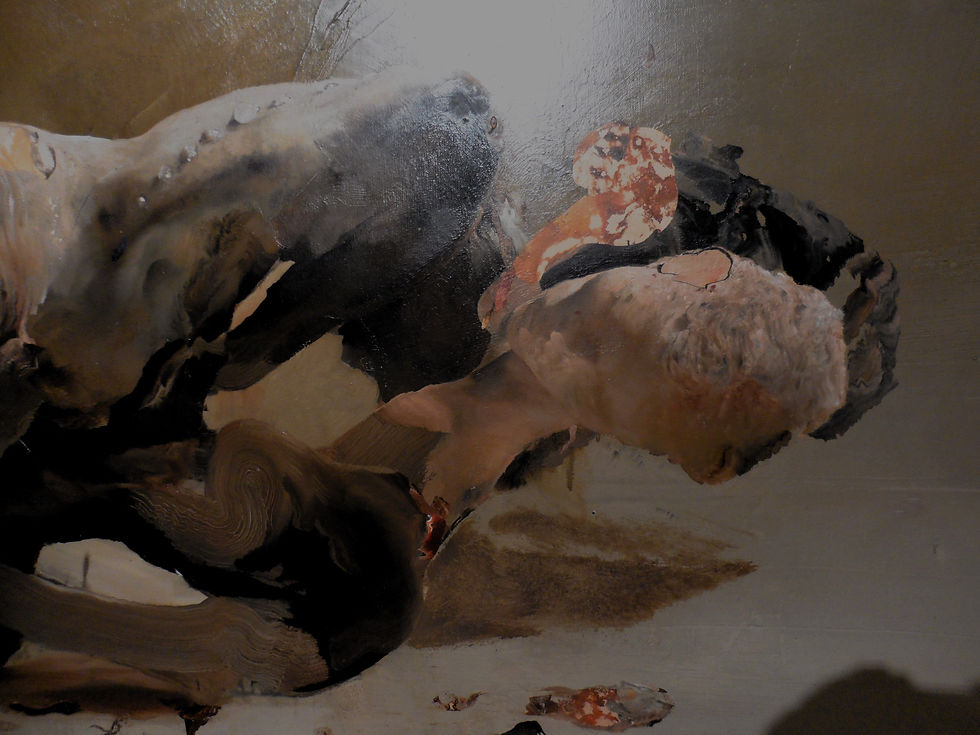
After completing our visit to the first floor, we descended to the ground floor; in an internal courtyard, we entered the newly restored Raffaello Causa Hall, located in a basement accessible by a convenient elevator. The exhibition CLASSICAL COLLAPSE by Forlì-born Nicola Samorì is on display here until March 10th.
He works across a variety of media (oil on canvas, onyx, marble, Trani stone); as critic Demetrio Paparoni writes, his work, in addition to its formal structure, is captivating for its conceptual depth, which transforms every act of rewriting into a challenge that destabilizes the apparent immutability of the classical.
To put it more simply, the works exhibited at Capodimonte are, in many cases, elaborations of classic Baroque paintings, which are transfigured in truly impressive ways. Here are some images of those that most impressed us:



And here's the juxtaposition that most struck us: that between Parmigianino's Lucretia (inspired by the woman described by Titus Livius who killed herself for the shame of being raped) and Samorì's Roman Lucretia, in which the drama is only evoked by the natural cracks in the onyx slab that reproduce tears. Below we show you the two paintings:

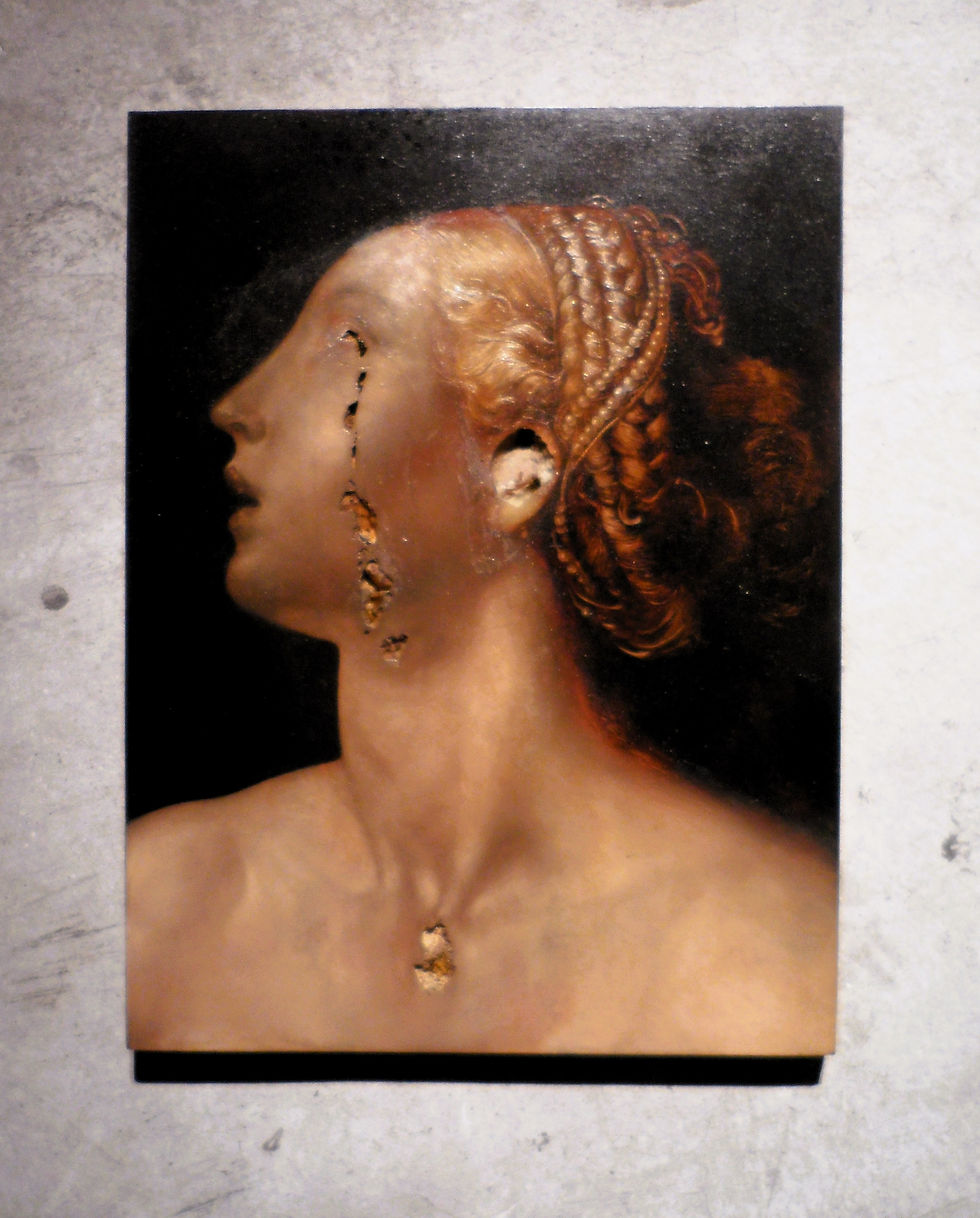


So, did we overdo it a bit with the exhibitions? Three at once, it's true, but all three seemed very stimulating. Anyway, sooner or later we'll talk about walks and travels again, we promise.
SEE YOU NEXT TIME!!!
(*) symbol indicating the presence of accessible restrooms
Comments